
Plug In at Home: Everything Fairfield County Drivers Need to Know About Home EV Charging
This post is part of our “Plugged In” series — Karl Chevrolet’s guide to EVs for Fairfield County drivers.
Ask any EV owner what surprised them most after they bought their first electric vehicle, and a large number will say the same thing: they didn’t expect how much they’d love waking up every morning to a full battery.
No gas stations. No detours on the way to school pickup. No pump handle smell on a cold January morning. Just a car that’s ready to go — every single day — because you plugged it in before you went to bed the night before.
Home charging is the foundation of a good EV life. And for most Fairfield County drivers, it’s simpler to set up than they imagine. Here’s everything you need to know.
Two Ways to Charge at Home
There are two levels of home charging available to most homeowners, and they’re not complicated to understand.
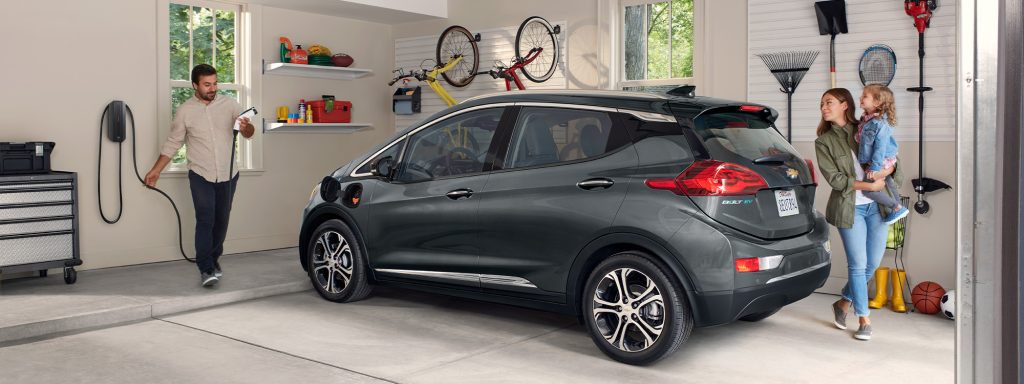
Level 1 charging uses a standard 120-volt household outlet — the same kind your phone charger or kitchen appliances use. Every Chevrolet EV comes with a dual-level charge cord that works with a standard outlet right out of the box. Level 1 adds roughly 4 to 5 miles of range per hour of charging. For drivers averaging 30 to 40 miles a day — very common in Fairfield County — overnight Level 1 charging on a 2027 Bolt or Equinox EV is perfectly adequate. No installation required. Plug it in and walk away.
Daphne Dixon, Executive Director and Co-founder of the Live Green Network in Norwalk and one of Fairfield County’s most well-traveled EV advocates, describes her own experience exactly this way:
“When I’m in Connecticut, I primarily charge my Equinox EV using the charger that came with the vehicle and a standard outlet in my garage — no special equipment needed. I honestly haven’t noticed an increase in my electric bill. My driving varies quite a bit. Some days I only drive locally, while other days I’m going from Fairfield to Hartford and back, or out to Litchfield County and home again. The Equinox EV has handled those trips comfortably with no need for en route charging and no range anxiety.”
For a driver whose daily mileage and trip patterns mirror those of many Fairfield County residents, Level 1 handles everything — comfortably.
Level 2 charging uses a 240-volt circuit — the same type that powers your dryer or electric range. A Level 2 charger adds 25 to 35 miles of range per hour, meaning most EVs charge fully overnight in 6 to 10 hours regardless of battery size. Level 2 is the right choice for drivers with longer daily mileage, larger battery vehicles like the Silverado EV, or anyone who simply wants the fastest, most convenient home charging experience.
For most Fairfield County EV owners who drive more than 50 miles a day or own a larger-battery vehicle, we recommend a Level 2 setup. The difference in daily convenience is meaningful. Where would you like to travel? Check out our EV Range guide for Fairfield County.

What Does Level 2 Installation Actually Cost?
This is where a lot of people assume the worst, and where reality tends to be more manageable than expected.
A quality Level 2 home charger (also called an EVSE) typically costs between $450 and $800 for the unit itself. Installation costs vary based on your home’s existing electrical system — specifically panel capacity, available breaker slots, and the distance from your panel to the intended charger location. Rather than give you a generic range, here are three real examples from recent Karl Chevrolet customers right here in Fairfield County.
A Darien customer with a modern panel and a straightforward installation location paid $425 for labor plus approximately $100 for the local permit – under $550 all in for the electrical work. A Stamford customer in a similar situation but with a longer run from the panel to the garage paid $795 plus the permit fee – still well under $1,000 for everything. Both were up and running with Level 2 charging the same day.
The third example is worth sharing because it actually turned into good news. A Westport customer in an older home had no open slots on their existing panel and, on inspection, had electrical service that needed upgrading overall. Their total cost for a new panel and full-service upgrade came to approximately $2,400. That sounds like more, and it is more, but this customer had previously received an estimate of nearly $5,000 for the same electrical upgrades without an EV charger involved. Adding the charger to the project gave them leverage to shop the job, and they ended up feeling like they had saved money on work their home needed regardless.
The lesson: installation cost varies, and the only way to know what your specific home requires is to have a licensed electrician assess it. But for most Fairfield County homes with modern 200-amp electrical service, the cost is far lower than most people expect. In the context of fuel savings of $1,500 to $2,500 per year at current Connecticut electricity rates and today’s gas prices, even the higher-end installations pay for themselves within a year or two.
“Will This Strain My Home’s Electrical System?”
It’s a fair question, and one that comes up often – especially from owners of older New Canaan and Darien homes.
The short answer is no, for the vast majority of homes. A Level 2 charger draws about the same power as a central air conditioning unit. Most homes handle both without issue. And modern smart chargers can be programmed to charge during off-peak hours – typically overnight – which spreads the load and keeps your usage from conflicting with daytime peaks.
For older properties that do need electrical work, that work is entirely achievable. Unlike large industrial retrofits, home charging infrastructure is a well-understood, routine job for licensed electricians throughout Fairfield County. The technology has advanced to where load management systems can route power intelligently, allowing multiple chargers on a single circuit in some configurations.
The bigger electrical story, as it turns out, isn’t home EV charging at all.
EVs and the Grid: The Story You’re Not Hearing
You’ve probably seen the headlines questioning whether the electrical grid can handle widespread EV adoption. It’s a reasonable concern worth addressing honestly, and the data tells a more reassuring story than most people realize.
According to analysis from Blink Charging and multiple independent energy researchers, even under aggressive national EV adoption scenarios, the increased electricity demand from electric vehicles represents only around 9% to 12% of projected U.S. grid capacity through 2030. And critically, that demand is distributed; spread across millions of homes, mostly overnight, when grid usage is at its lowest.
Now consider this: electricity demand from AI data centers surged by 17% in 2025 alone, according to the International Energy Agency, a growth rate that far outpaced overall electricity demand growth of 3%. The IEA projects that global data center consumption will roughly double by 2030, potentially reaching 10% of total available power on its own. In some regions of the U.S., particularly Virginia, which hosts a massive concentration of hyperscale data centers, these facilities already account for more than a quarter of all electricity consumption.
The contrast is striking. AI data centers represent large, concentrated, around-the-clock power loads that spike rapidly in specific geographic areas. EV charging at home is distributed, scheduled overnight, and, by its very nature, flexible in ways that large industrial loads are not.
When experts discuss grid stress, the real story is artificial intelligence infrastructure, not the family in New Canaan plugging in their Equinox EV before dinner. The two aren’t even in the same category.
Your EV as a Home Energy Asset – GM’s Home Energy Solutions
Here’s where the story takes a turn most people don’t see coming: your electric vehicle isn’t just a consumer of energy. With the right equipment, it can become a producer of it.
GM’s Home Energy Solutions – offered through GM Energy at gmenergy.gm.com – brings Vehicle-to-Home (V2H) bidirectional charging technology to the Chevrolet EV lineup. V2H means energy can flow both directions: from the grid into your vehicle when charging, and from your vehicle’s battery back into your home when you need it.
The implications are significant for Fairfield County homeowners.
Peak demand offset. Connecticut electricity rates are higher during peak demand hours. A V2H-equipped Chevrolet EV can discharge stored energy back into your home during those peak periods, drawing on the charge in your vehicle’s battery rather than from the grid at its most expensive moment. The result is lower electricity bills and a smarter home energy footprint.
Power outage backup. Anyone who has lived through a Nor’easter in Fairfield County knows that power outages are a real part of Connecticut life. A Silverado EV with V2H capability and its substantial battery can power an average home for up to 21 days. That’s far longer than any conventional generator, and without the noise, the exhaust, or the need to store gasoline.
Grid stabilization. This is where the broader story becomes genuinely interesting. As millions of EVs are equipped with V2H capability, they can collectively act as a distributed energy resource. Thus, EVs absorbing excess power from the grid during low-demand periods and feeding it back during peak demand. Instead of EVs straining the grid, they can actually help stabilize it. The very technology that worries people about grid capacity is, in the hands of V2H-equipped EV owners, a tool for grid resilience.
GM’s V2H technology is available now across the current Chevrolet Ultium-based EV lineup; including the Blazer EV, Equinox EV, and Silverado EV that we carry at Karl Chevrolet. The Ultium Home V2H Bundle, which includes GM’s PowerShift bidirectional charger and the V2H Enablement Kit (inverter, home hub, and dark start battery), delivers 9.6 kW of home discharge power. Installation is handled through GM Energy’s partner Qmerit, which manages permits and utility connections. GM Energy’s software platform manages the entire energy flow – vehicle, home, and grid – through a single interface.
For Fairfield County homeowners with solar panels, the system integrates seamlessly with photovoltaic installations, allowing solar energy to charge the vehicle during the day and flow back into the home in the evening. Karl Chevrolet’s own rooftop solar installation gives us a real appreciation for how well these systems work together.
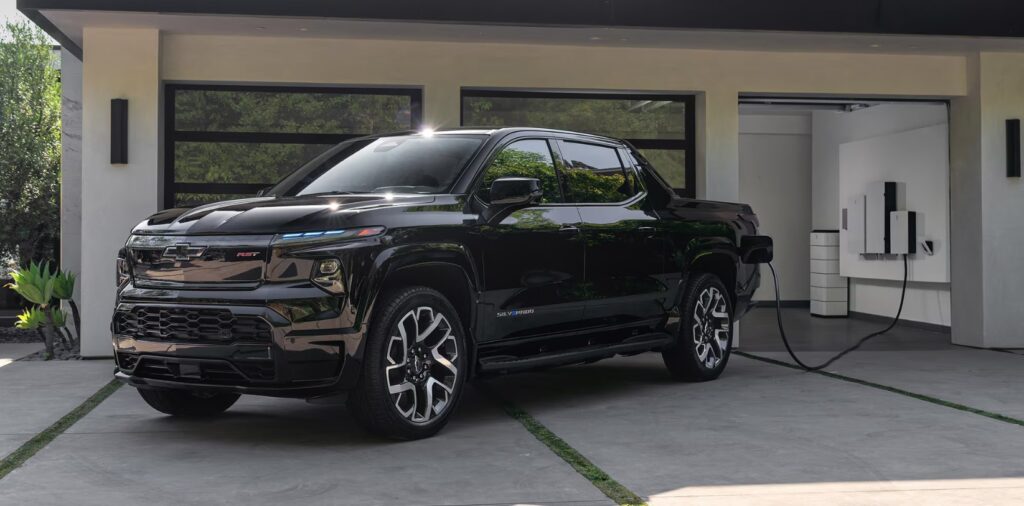
GM Energy Power Shift Bi-Directional Charger lets you power your home from your EV in the event of a power outage.
The Morning Routine That Changes Everything
Here’s the practical reality of home charging that no spec sheet fully captures.
Every EV owner who installs home charging, Level 1 or Level 2, describes a version of the same experience. After a few weeks, the mental model of “I need to find a gas station” simply disappears. You plug in when you get home. You unplug when you leave. The car is full. Every day.
It’s not unlike how you already treat your phone. You don’t worry about running out of charge because you plug it in overnight. The anxiety disappears because the system is automatic.
For most Fairfield County families, daily driving falls well within the overnight charging window. The Bolt charges fully on Level 1 in many overnight scenarios. The Equinox EV on Level 2 is ready in six to eight hours. The Silverado EV — with its significantly larger battery, charges comfortably on Level 2 overnight for typical daily use.
The gas station, in this picture, becomes the exception rather than the routine. Most of our EV customers tell us within a few months that they can barely remember the last time they stopped for fuel.
Our Recommendation for Getting Started
If you’re seriously considering an EV purchase and want to think through your home charging setup before you decide, we’re happy to walk through it with you, at the dealership, by phone, or by email. The questions are always the same: How many miles do you drive daily? What’s your current electrical service? Do you have a garage or covered parking? Is solar a consideration?
And if you live in a Condominium or apartment, we are still happy to discuss your options. We’ve worked with several associations to help pave the way for EV charger installation.
Those answers shape the right charging recommendation for your household. And getting that setup right from day one is the difference between an EV that works seamlessly in your life and one that adds friction.
Explore GM Home Energy Solutions: gmenergy.gm.com
Next in the series: “What Does an EV Actually Cost?” – a real-world total cost of ownership breakdown for Connecticut drivers, including fuel savings, maintenance differences, and how today’s incentives change the five-year math.
Browse our full EV lineup – Bolt, Equinox EV, Blazer EV, and Silverado EV: karlchevy.com/search-evs
Read the full series: Plugged In — Karl Chevrolet’s EV Guide for Fairfield County
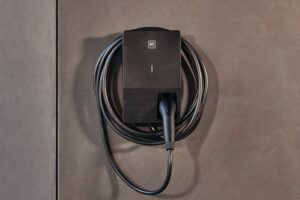
Karl Chevrolet customer’s most popular home charger – the GM Energy Power Up 2