
What Does an EV Actually Cost? A Real-World Guide for Connecticut Drivers
This post is part of our “Plugged In” series — Karl Chevrolet’s guide to EVs for Fairfield County drivers.
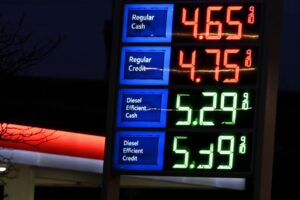 Fairfield County drivers are paying $4.71 (or more) per gallon for regular gasoline as of mid-May 2026. That’s the highest average in Connecticut, and nearly $1.55 more per gallon than this time last year. With the Strait of Hormuz closure sending oil markets into extended volatility, U.S. Senator Richard Blumenthal has noted that Connecticut fuel prices have risen approximately 60% since tensions between the United States and Iran escalated. Some local stations are already seeing regular gas above $5.00 per gallon.
The question Fairfield County drivers are asking us has shifted. It’s no longer “is an EV worth considering?” It’s “show me the actual numbers.”
Here they are.
Start With What You Already Know: Price Parity
In our first post in this series, we established the foundation: the 2026 Chevrolet Equinox EV LT and the 2026 Chevrolet Equinox LT, gas version, are currently priced within $106 of each other at Karl Chevrolet. The electric vehicle is the lower-priced option.
That means the total cost of ownership comparison doesn’t begin with a purchase price penalty for the EV. It begins at zero. Everything from here is savings.
Year One: The Fuel Calculation
Let’s run the numbers for a typical Fairfield County family driving 15,000 miles per year — a reasonable estimate for a primary vehicle.
The gas Equinox LT is EPA-rated at approximately 28 miles per gallon combined. At 15,000 miles per year, that’s roughly 535 gallons of gasoline annually. At the current Fairfield County average of $4.71 per gallon for regular, that’s $2,520 per year at the pump, and that number assumes prices stay where they are today. If prices continue rising toward $5.00 or beyond, the annual fuel bill climbs past $2,675.
The Equinox EV LT uses approximately 3.5 to 3.7 miles per kilowatt-hour in real-world driving. At 15,000 miles per year, that’s roughly 4,100 to 4,300 kWh annually. Connecticut Eversource residential customers are currently paying an all-in rate of approximately 25 cents per kWh following the May 2026 rate reduction approved by Governor Lamont. At that rate, fueling the Equinox EV at home costs approximately $1,025 to $1,075 per year in electricity. And if you are lucky enough to have access to EV Charging at work, you will likely save even more!
The annual fuel savings: approximately $1,450 to $1,500 per year at today’s prices.
Across five years, at current pricing, that’s $7,250 to $7,500 in fuel savings alone, and that assumes Fairfield County gas prices don’t rise further from their current levels.
The Half of the Equation Nobody Talks About: Maintenance
Fuel savings are the headline. Maintenance savings are where EV ownership quietly builds its strongest financial case, and where most consumers significantly underestimate the advantage.
A conventional gas vehicle contains hundreds of moving parts that wear, degrade, and require periodic replacement: an engine with pistons, valves, belts, and seals; a transmission with fluid that needs changing; a cooling system with hoses, thermostats, and water pumps; exhaust components; spark plugs; air filters; oil that must be changed every 5,000 to 7,500 miles. The average gas vehicle owner spends between $350 and $750 per year on routine maintenance, not counting unplanned repairs.
An EV eliminates most of that list. No oil changes. No transmission fluid. No spark plugs. No timing belt. No exhaust system. And here’s one that surprises people: brake pads on EVs last dramatically longer than on gas vehicles, because regenerative braking does most of the decelerating work. Instead of converting kinetic energy into heat and brake dust, the EV converts it back into electricity. EV maintenance basically comes down to tire rotation, wheel balancing and alignment, and a few suspension lubrication points. Oh, and every five years there is a coolant flush for your EV’s liquid cooled battery pack.
According to multiple 2024–2026 studies synthesizing DOE data and consumer research, EVs cost approximately 30 to 50% less to maintain than comparable gas vehicles over their lifetime. A study analyzing 65 million repair orders found EV maintenance costs averaged roughly one-third of gas vehicle costs in the first three years of ownership. Consumer Reports and independent analyses consistently place routine EV maintenance at $150 to $400 per year for most mainstream models.
For our Equinox comparison, a conservative estimate puts the annual maintenance advantage at $400 to $500 per year, oil changes alone on a gas Equinox typically run $120 to $180 annually, and that’s before transmission service, air filters, and the inevitable wear items that accumulate over time.
Over five years, the maintenance savings add another $2,000 to $2,500 or more to the EV’s advantage.
The Five-Year Picture
Let’s put it all together for a Fairfield County family driving 15,000 miles per year in a 2026 Equinox EV versus a comparable gas engine vehicle, starting from equivalent purchase prices:
| Gas Vehicle | Equinox EV LT | |
|---|---|---|
| Purchase price | $35,042 | $34,936 |
| Annual fuel cost | ~$2,520 | ~$1,050 |
| Annual maintenance | ~$550 | ~$125 |
| Annual total operating cost | ~$3,070 | ~$1,175 |
| Annual savings (EV) | ~$1,895 | |
| 5-year operating savings | ~$9,475 | |
| CT CHEAPR rebate | — | $1,000 |
| 5-year total advantage (EV) | ~$10,475 |
These are real numbers using current Fairfield County fuel prices, current Connecticut electricity rates, and independently verified maintenance cost data. They are not projections based on optimistic assumptions. They are based on what things actually cost today.

What If Gas Prices Drop?
It’s a fair question, and one we’d rather answer than avoid. If gas prices retreated to $3.50 per gallon, roughly where they were before the current Iran-driven spike, the fuel savings advantage narrows from approximately $1,500 per year to approximately $900 per year.
But here’s the important point: even in a scenario where gas prices dropped significantly, the maintenance savings alone, at $400 to $500 per year, remain constant. They don’t depend on oil prices, geopolitical events, or any external variable. They are structural to how an EV is built. Fewer parts. Less service. Lower bills.
In a normalized gas price environment, the five-year total advantage narrows. It doesn’t disappear. And with Fairfield County’s historic premium over state and national gas averages, driven by proximity to New York and regional supply dynamics, the fuel savings case for this market tends to be stronger than the national average in any price environment.
A Local Voice on the Math
Daphne Dixon, Executive Director and Co-founder of the Live Green Network in Norwalk, has been living this math firsthand:
“Another common misconception is that EVs are still too expensive. While some models are premium-priced, costs have been coming down steadily, and there are now many affordable options on the market. When people compare the total cost of ownership – especially with gas prices remaining high and maintenance costs for EVs being much lower – some EVs are at cost parity with traditional internal combustion engine vehicles.”
Daphne has driven across the country three times and traveled through 44 states in a Chevrolet EV. She’s not speaking theoretically about the economics. She’s speaking from the road.
Do the Math for Your Own Situation
The New York Times Electric Vehicle vs. Gas Car Calculator is the tool we recommend most often to customers who want to model their own specific scenario, using their current vehicle, their actual mileage, their local gas prices, and their electricity rate. It’s independent, it’s free, and it produces a five-year cost comparison you can use as a real decision-making input.
The Times also published a companion piece, How Much It Costs to Drive an E.V. and a Gas Car in Every State, which places Connecticut among the states where EV ownership delivers the strongest financial return. This is driven by our above-average gas prices and the relatively predictable cost of residential electricity.
Connecticut’s CHEAPR Rebate: Still on the Table
While the federal EV tax credit under the Inflation Reduction Act expired on September 30, 2025 and is no longer available for new 2026 vehicle purchases, Connecticut’s own CHEAPR program remains active. Eligible Connecticut residents can receive a $1,000 point-of-sale rebate on a qualifying new battery electric vehicle. Karl Chevrolet can apply for this directly at the dealership, with no waiting for a tax refund. Income-qualified buyers may be eligible for additional savings through the CHEAPR Rebate+ program.
We factor the CHEAPR rebate into every EV conversation we have at Karl Chevrolet, and we’re happy to walk through your eligibility before you decide.
The Bottom Line
At price parity between the gas and electric Equinox, with Fairfield County gasoline at $4.71 per gallon and climbing, and with maintenance costs running 30 to 50% lower on EVs than on comparable gas vehicles, the five-year total cost of ownership advantage for the Equinox EV in this market is approximately $10,000 to $11,000.
That’s not a marketing projection. It’s the result of running current, locally specific numbers honestly, the same way we price our vehicles and have done business since 1927.
The math has changed. The question is whether you’ve had a chance to look at it.
We are fans of Electric Vehicles, with many of our team members driving an EV for their own personal daily transportation. This real-world knowledge has helped Karl Chevrolet be recognized as one of the TOP FIVE Electric Vehicle dealers in the state of Connecticut (Dealers in CT That Support EV Sales).
Next in the series: “What Incentives Are You Actually Eligible For?” – a Connecticut buyer’s guide to what remains available in 2026, how the CHEAPR program works, and how to maximize the savings you qualify for.
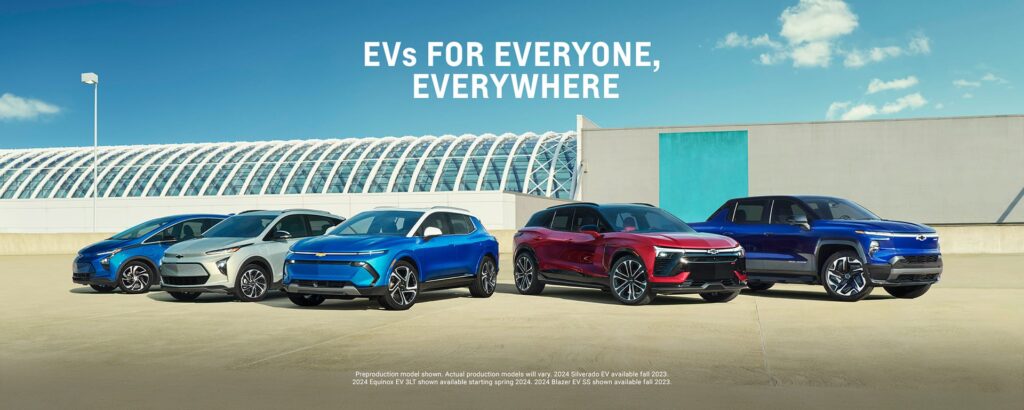
Browse our full EV lineup — Bolt, Equinox EV, Blazer EV, and Silverado EV: karlchevy.com/search-evs
Read the full series: Plugged In — Karl Chevrolet’s EV Guide for Fairfield County